

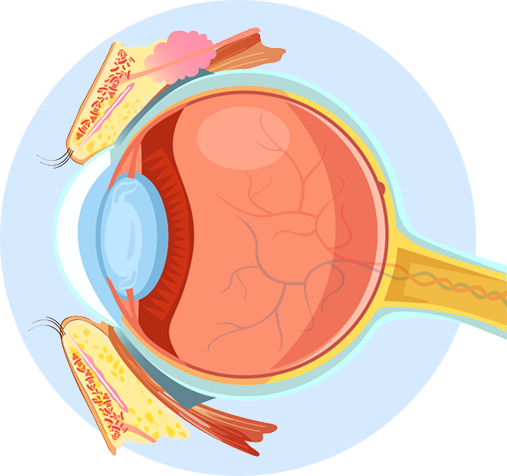
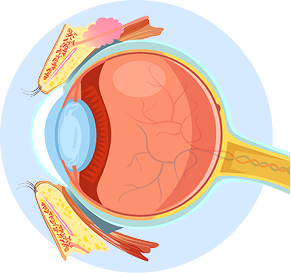




Moving musculomembranous
areas that cover and protect
the anterior part of the eye:
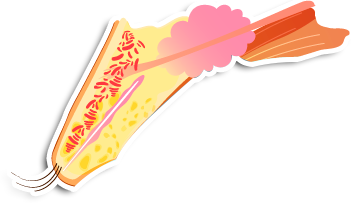
• UPPER EYELID
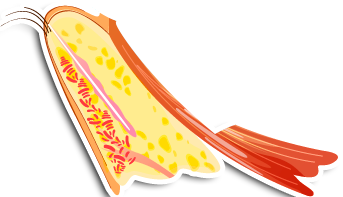
• LOWER EYELID


Eyelids Anatomy & Fonction
The eyelid is a thin, flexible structure made of several layers:
The outermost layer is the skin which is the thinnest in the entire body, allowing the eyelid to move quickly and smoothly. The eyelid muscles contribute to open and close the eye and also to facial expressions. When the eyes are open, the space between the upper and lower eyelids is called the palpebral fissure. This opening is bordered by structures that help guide tears toward the inner corner of the eye, where they drain into the nose. 1,4
The upper and lower eyelids differ mainly in their retractor muscles 1 and have about 100–150 and 50–75 eyelashes respectively, which help shield the eye from debris 3.
Common eyelid problems
There are various disorders and diseases associated with the eyelids, many of them related to blocked glands:
- Blepharitis (caused by multiple factors, often involving bacterial colonization, parasitic infestation, and skin disorders); is the general term for inflammation of the eyelid margins. The anterior and/or posterior part of the eyelid can be affected by Blepharitis.
- Meibomian Gland Dysfunction (MGD) is chronic, diffuse abnormality of Meibomian gland with duct obstruction and/or qualitative / quantitative changes in the lipid secretion(8).
- Chalazion is inflammation caused by a blocked duct in one of the Meibomian glands.
- Styes are infections of the Zeiss or Moll glands (sebaceous glands associated with eyelash follicles: The glands of Zeiss open into hair follicles, while the glands of Moll have their own ducts opening onto the eyelid margin) at the base of the eyelash (11).
Managing eyelid problems usually involves simple, targeted treatments based on the specific issue and how severe it is. For common conditions like blepharitis or meibomian gland dysfunction (MGD), care often starts with easy at-home steps such as warming, massage and gentle eyelid cleaning. Sometimes doctors may add antibiotic drops or recommend newer treatments to calm inflammation and help the eyelid glands work better (7).
In conclusion, eyelids are complex structures integral to protecting our eyes and maintaining overall eye health. Proper care and awareness of their function can prevent many common eye issues and contribute to visual well-being.
- Cochran, M. L., Lopez, M. J., & Czyz, C. N. (2023, August 14). Anatomy, head and neck: Eyelid. In StatPearls [Internet]. StatPearls Publishing.Anatomy, Head and Neck: Eyelid – StatPearls – NCBI Bookshelf
- Knop E, Knop N, Millar T, Obata H, Sullivan DA. The international workshop on meibomian gland dysfunction: report of the subcommittee on anatomy, physiology, and pathophysiology of the meibomian gland. Invest Ophthalmol Vis Sci. 2011 Mar 30;52(4):1938-78
- Khan, H. (2024). A review article on different types of eyelid disorders. Southeast Asian Journal of Health Professional, 7(3), 65–73. https://www.ipinnovative.com/open-access-journals
- Rigoni, C. (2016). Introduction: Anatomy of the lips and eye. In Nonsurgical lip and eye rejuvenation techniques (pp. 1–6). Springer. https://doi.org/10.1007/978-3-319-27580-4_1
- Verma, S., Moreno, I. Y., Trapp, M. E., Ramirez, L., Gesteira, T. F., & Coulson-Thomas, V. J. (2023). Meibomian gland development: Where, when and how? Differentiation, 132, 41–50. https://doi.org/10.1016/j.diff.2023.04.005
- Pflugfelder, S. C., & Stern, M. E. (2020). Biological functions of tear film. Experimental Eye Research, 197, 108115. https://doi.org/10.1016/j.exer.2020.108115
- Jones, L., Craig, J. P., Markoulli, M., Karpecki, P., Akpek, E. K., Basu, S., Bitton, E., Chen, W., Dhaliwal, D. K., Dogru, M., Gomes, J. A. P., Koehler, M., Mehta, J. S., Perez, V. L., Stapleton, F., Sullivan, D. A., Tauber, J., Tong, L., Travé-Huarte, S., & Wolffsohn, J. S. (2025). TFOS DEWS III: Management and therapy. American Journal of Ophthalmology. https://doi.org/10.1016/j.ajo.2025.05.039
- Wolffsohn, J. S., Benítez-Del-Castillo, J. M., Loya-Garcia, D., Inomata, T., Iyer, G., Liang, L., Pult, H., Sabater, A. L., Starr, C. E., Vehof, J., Wang, M. T. M., Chen, W., Craig, J. P., Dogru, M., Perez, V. L., Stapleton, F., Sullivan, D. A., Jones, L., & TFOS Collaborator Group. (2025, November) TFOS DEWS III: Diagnostic methodology. American Journal of Ophthalmology, 279, 387–450. https://doi.org/10.1016/j.ajo.2025.05.033
- Eberhardt, M., Zeppieri, M., & Rammohan, G. (2025, February 3). Blepharitis. In StatPearls [Internet]. StatPearls Publishing. Available from Blepharitis – StatPearls – NCBI Bookshelf
- Santiago, S., Suchecki, J., & Whitaker-Worth, D. (2023). Routine eyelid care for those without dermatitis. Clinics in Dermatology, 41(4), 503–508. https://doi.org/10.1016/j.clindermatol.2023.08.010
- Kim ES, Afshin EE, Elahi E. The lowly chalazion. Surv Ophthalmol. 2023 Jul-Aug;68(4):784-793. doi: 10.1016/j.survophthal.2022.11.002 .


